A cool house can still feel sticky. If your skin feels clammy, windows collect condensation, or your basement has a musty smell, you may be dealing with more moisture than your home can manage. Knowing how to lower home humidity starts with finding where that moisture is coming from – not simply turning the thermostat down.
For most homes, indoor relative humidity between 30% and 50% is a comfortable target. During a humid Ohio summer, holding the entire home below 50% may not always be realistic without the right equipment, but consistent readings above 55% deserve attention. High humidity can make rooms feel warmer, encourage mold growth, worsen dust-mite issues, and leave wood floors, trim, and furnishings vulnerable to moisture damage.
Start by Measuring the Humidity
Before changing settings or buying equipment, use an inexpensive digital hygrometer in the areas that feel dampest. Check the main living area, basement, and any room with recurring condensation. Humidity changes throughout the day, so take readings over several days rather than relying on one number.
A reading in the 50% to 55% range may call for small adjustments, especially during rainy weather. Readings that stay at 60% or higher point to a bigger issue, such as inadequate air conditioning runtime, poor ventilation, water intrusion, or an undersized dehumidifier.
Pay attention to patterns. If only the basement is damp, the solution may be different from a home where every room feels humid. If moisture rises after showers, laundry, or cooking, ventilation may be the first place to look.
Let Your Air Conditioner Remove Moisture
Your central air conditioner does more than lower the temperature. As warm air passes over the cold indoor coil, moisture condenses and drains away. But the system needs enough runtime to do that work.
Set the thermostat fan to Auto, not On. In the On setting, the blower can keep moving air after a cooling cycle ends. That can reintroduce moisture from the indoor coil back into the house. Auto allows the coil to drain between cycles.
Avoid setting the thermostat extremely low in an effort to dry the home faster. That may make the house uncomfortable, raise energy use, and still fail to solve the underlying moisture source. A steady, reasonable temperature setting gives the system a better chance to run normal cooling cycles.
If your air conditioner runs briefly, shuts off, and leaves the home muggy, it may be oversized for the house, improperly set up, or dealing with an airflow or maintenance problem. An oversized system can cool the air so quickly that it does not run long enough to remove much moisture. That is one reason equipment size should be based on a real home evaluation, not a guess based on square footage alone.
Keep the System Ready for Humid Weather
A clogged filter, dirty indoor coil, blocked condensate drain, or low airflow can reduce an air conditioner’s ability to remove moisture. Replace or clean filters on schedule, keep supply and return vents open and unblocked, and have the system checked before or during the cooling season.
A drain issue deserves prompt attention. Water around the furnace or air handler, a safety switch that repeatedly shuts down cooling, or a musty smell near the equipment can mean condensate is not draining correctly. That moisture belongs outside the system, not in your utility area.
Use Exhaust Fans Where Moisture Starts
Daily activities add a surprising amount of water vapor to indoor air. Showers, baths, boiling water, dishwashers, and clothes dryers all contribute. Spot ventilation removes that moisture before it spreads through the home.
Run bathroom exhaust fans during showers and for about 20 minutes afterward. The fan should vent outdoors, not into an attic or another enclosed area. If the mirror stays fogged long after a shower, the fan may be too weak, dirty, poorly ducted, or simply not being run long enough.
Use the range hood when cooking, particularly when boiling pasta, simmering soups, or using multiple burners. If the hood only recirculates air through a filter, it may help with odors but will not remove moisture outdoors.
Your dryer should also vent outside through a properly connected, clear duct. A disconnected dryer vent can send a large amount of warm, damp air into a basement, laundry room, crawlspace, or attic. Never use a ventless indoor dryer kit with a gas dryer.
Address Basement and Crawlspace Moisture
Basements are often cooler than the rest of the home, which makes moisture more likely to condense there. In Miami Valley homes, humid summer air can enter through foundation cracks, rim joists, open windows, or poorly sealed doors and meet cool basement surfaces.
First, look for water problems outside. Gutters should be clear, downspouts should carry water away from the foundation, and grading should slope away from the home. A dehumidifier can help manage indoor moisture, but it cannot fix rainwater entering through a foundation wall or a plumbing leak.
Keep basement windows closed during muggy weather. Opening them may feel like ventilation, but outdoor air often carries more moisture inside. If you have a crawlspace, standing water, wet insulation, damaged vapor barriers, or visible mold should be evaluated rather than covered up with a portable unit.
Choose a Dehumidifier That Fits the Space
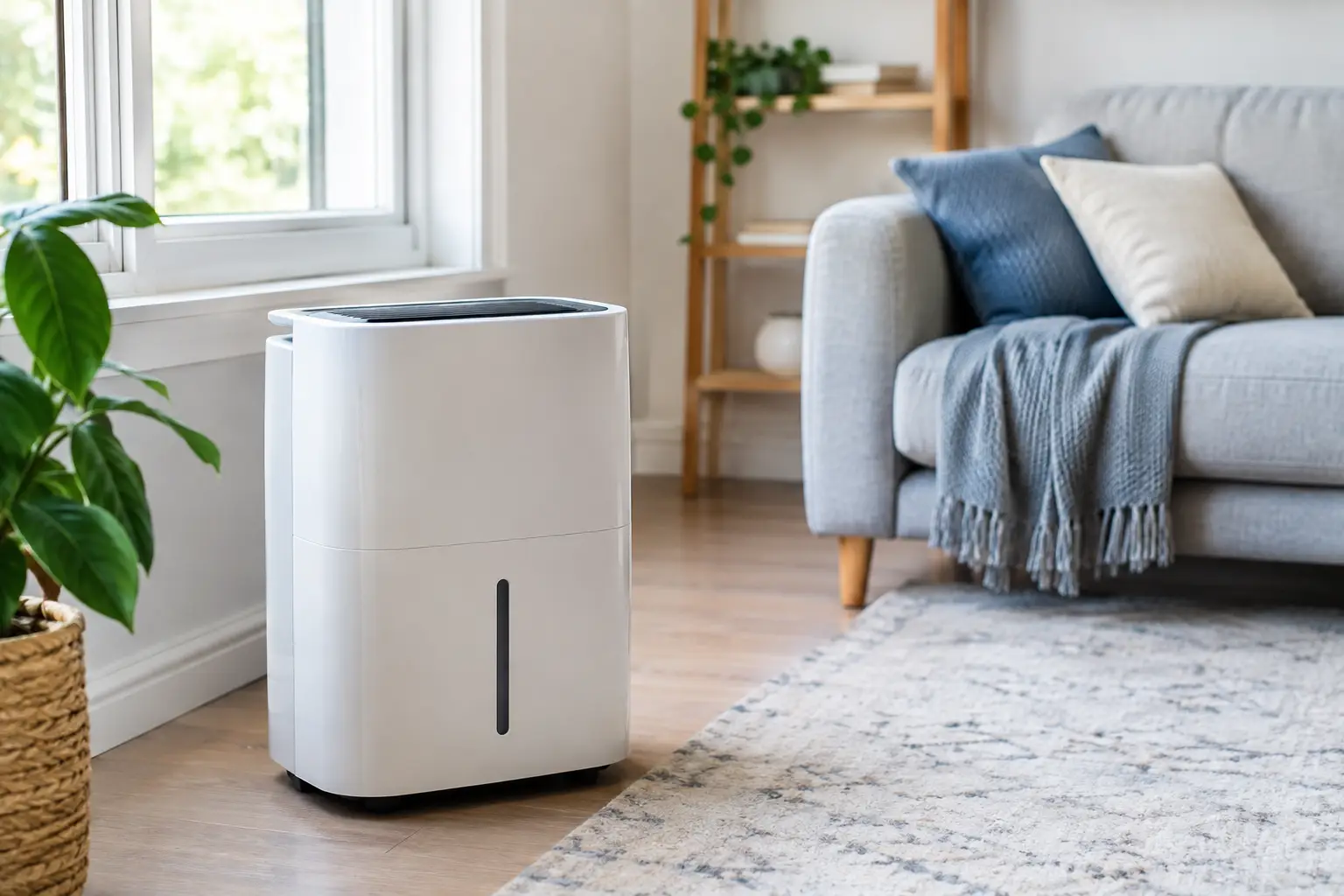
A portable dehumidifier works well when moisture is limited to a basement, laundry room, or one problem area. Choose a unit rated for the space and the severity of dampness, then give it room for airflow. Keep doors and windows closed while it runs, clean its filter, and set up a drain hose if possible so the bucket does not fill and shut the unit off.
For a whole-home humidity issue, a whole-home dehumidifier may be a better fit. These systems connect with the HVAC system and drain automatically, providing more consistent control without emptying buckets. They are especially useful when the air conditioner is operating normally but the home still stays damp during mild, rainy weather.
Reduce Moisture Brought In From Outside
Not every humidity problem begins indoors. Air leaks around attic hatches, plumbing penetrations, doors, windows, and ductwork can bring humid outdoor air into conditioned spaces. Leaky return ducts are a common concern because they can pull unconditioned air from attics, garages, crawlspaces, or wall cavities into the HVAC system.
Weatherstripping and air sealing can help, but the right approach depends on the home. Tightly sealing a house without making sure bathrooms, kitchens, and combustion appliances are properly ventilated can create new comfort or safety concerns. This is a good area for a professional assessment rather than sealing every opening at random.
Also avoid drying clothes indoors during humid weather unless the area is well ventilated. Houseplants, aquariums, and frequent steam cleaning can add moisture too, though they are usually contributing factors rather than the sole cause of a major humidity problem.
When High Humidity Needs Professional Help
Call for HVAC or moisture-control help if you see recurring mold, water stains, condensation inside windows, peeling paint, warped wood, or humidity that remains above 60% despite using your air conditioner and exhaust fans. You should also schedule service if the system is not cooling evenly, cycles rapidly, freezes up, leaks water, or produces a musty odor when it runs.
A good diagnosis looks beyond the thermostat. It may include checking cooling performance, airflow, duct condition, drainage, ventilation, insulation, and the source of any water intrusion. The right answer could be a repair, maintenance, better ventilation, a dedicated dehumidifier, or work outside the HVAC system. It depends on what your home is actually doing.
For homeowners in Troy, Piqua, Tipp City, and nearby Miami Valley communities, Fusion Heating and Air can help identify whether your comfort issue is tied to your cooling equipment, airflow, or a humidity-control need. The goal should be clear answers and a practical recommendation, not pressure to replace equipment that still has useful life.
A dry, comfortable home usually comes from several small systems working together: cooling, ventilation, drainage, and moisture control. Start with a humidity reading, pay attention to when the problem appears, and act on the source. That gives you a much better chance of solving the stickiness for good.
Leave a Reply