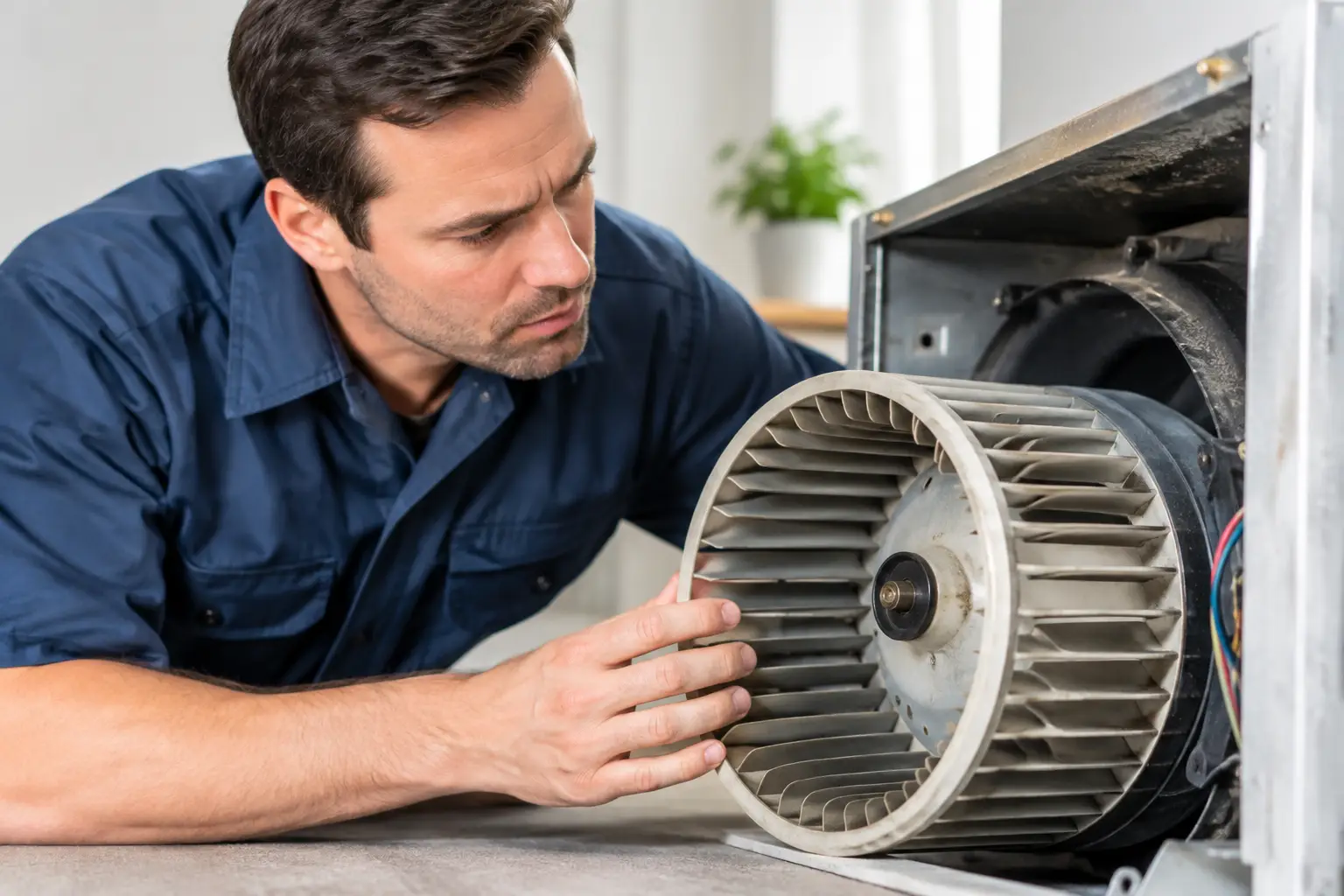
Your thermostat may say the furnace or air conditioner is running, but the rooms still feel stagnant. Maybe the outdoor unit is on, or you can hear the furnace start, yet very little air reaches the registers. That is one of the top signs of a failing blower motor – and it is a problem worth addressing before a mild comfort issue becomes a no-heat or no-cooling call.
The blower motor is the part of your indoor HVAC system that moves conditioned air through the ductwork. It works during heating and cooling cycles, so a blower problem can affect your home year-round. Some symptoms have simple causes, such as a clogged filter or a thermostat setting. Others point to a motor, capacitor, control board, or wiring issue that needs professional diagnosis.
7 top signs of a failing blower motor
1. Weak airflow from several vents
A weak stream of air from one room can be caused by a closed register, furniture blocking a vent, or a duct issue. Weak airflow throughout the house is different. If multiple rooms have poor circulation while the system is calling for heating or cooling, the blower may not be operating at full speed.
A dirty filter can also restrict airflow and make the motor work harder. Check the filter first if it is accessible and you know it is overdue for replacement. If a clean filter does not improve the airflow, do not keep turning the thermostat lower or higher to force the system to run. That can add strain without solving the cause.
2. No air is coming from the vents
When the system appears to run but there is no air at all from the supply vents, the blower may have stopped. In a furnace, you may hear the burners or ignition sequence but never hear the familiar rush of air. With air conditioning, the outdoor unit may run while the indoor air handler is not moving cooled air through the home.
This symptom can be caused by a failed motor, a failed capacitor, an electrical issue, or a safety switch. It is not something to diagnose by reaching into the equipment cabinet. Turn the system off at the thermostat and arrange service, especially if the air conditioner is running without indoor airflow. Continuing to run it can allow the indoor coil to freeze.
3. New noises from the furnace or air handler
A healthy blower is noticeable but not dramatic. Rattling, scraping, squealing, grinding, or a loud humming sound deserves attention. A loose blower wheel can rattle or scrape. Worn bearings may create grinding or squealing. A motor that hums without starting may be struggling to turn.
The timing of the noise is useful information for a technician. Notice whether it begins immediately when the system starts, only after it has been running for a few minutes, or when the fan shuts off. You do not need to identify the part yourself. A clear description of what you hear can make diagnosis faster and more accurate.
4. The fan runs only sometimes
Intermittent operation is one of the more frustrating signs because the system may work normally when help arrives. You might have airflow in the morning, then find the house warm in the afternoon even though the thermostat is set correctly. The blower may start after several attempts, run at an inconsistent speed, or shut off before the heating or cooling cycle is complete.
Heat can expose a weak electrical component or a motor that is beginning to overheat. A capacitor or control problem can produce similar behavior, which is why replacing a blower motor based on symptoms alone is not a good idea. A proper visit should include testing the motor and the components that control it.
5. Your system is short cycling or overheating
Your furnace relies on airflow to carry heat away from the heat exchanger. If the blower cannot move enough air, the furnace can overheat and shut down on a safety limit. It may start again after cooling down, then repeat the cycle. You may notice short heating cycles, cooler-than-usual air, or a furnace that stops before the home reaches the set temperature.
Air conditioning has its own version of this problem. Limited airflow can cause the evaporator coil to become excessively cold and freeze. Signs can include reduced cooling, ice on refrigerant lines near the indoor unit, or water around the equipment after the ice melts. Shut off cooling and call for service if you see ice. Running the system longer rarely fixes a frozen coil.
6. A burning smell or unusually hot equipment
A brief dusty smell at the first furnace startup of the season is common. A persistent electrical or burning odor is not. Overheated motors, damaged wiring, and failing electrical components can all create a smell that should be taken seriously.
Turn the thermostat off if you smell burning, see smoke, or hear sharp buzzing from the unit. If there is smoke or a fire concern, leave the home and call emergency services. For a non-emergency equipment concern, do not restart the system repeatedly to see whether the odor returns. An HVAC technician can inspect it safely and determine whether the blower motor is the cause.
7. Rising electric bills without a clear reason
A blower motor that is struggling can draw more power or run longer to move the same amount of air. That does not mean every higher utility bill is a motor problem. Severe outdoor weather, thermostat changes, duct leaks, insulation issues, and aging equipment can all affect energy use.
Still, a noticeable bill increase paired with weak airflow, noise, or uneven temperatures is a useful clue. Mention it during service. Looking at the full pattern helps separate a failing blower from other comfort and efficiency issues.
What homeowners can check before scheduling service
Start with the simple, safe checks. Confirm the thermostat is set to heat or cool, not just fan mode, and make sure its temperature setting calls for the system to run. Check that the return grille and supply registers are not blocked. Replace a visibly loaded filter with the correct size and type recommended for your system.
Also check the circuit breaker once. If it has tripped, you may reset it a single time. If it trips again, leave it off and schedule a repair. Repeated breaker trips can indicate an electrical fault. Avoid removing access panels, bypassing switches, or touching motor wiring. Modern HVAC equipment has safety controls for a reason, and a blower issue can have more than one cause.
Why prompt diagnosis protects more than comfort
The blower motor is connected to the overall health of your system. Poor airflow can overheat a furnace, freeze an air-conditioning coil, reduce comfort in bedrooms and living areas, and place extra stress on other components. Catching the issue early may mean a smaller repair instead of damage caused by continued operation.
There is also a practical trade-off. A motor may be repairable if the problem is a capacitor, wiring connection, or control component. If the motor itself has failed, the right recommendation depends on the age and condition of the system, the availability of the part, and whether other major repairs are approaching. Honest diagnosis should give you those options clearly, without pressure.
For homeowners in Troy and the surrounding Miami Valley, Fusion Heating and Air can inspect airflow concerns, explain what the testing shows, and provide upfront options for getting the home comfortable again. If your system is making new noises, moving little air, or giving off a burning odor, turning it off and arranging a professional inspection is a sensible next step.
Leave a Reply