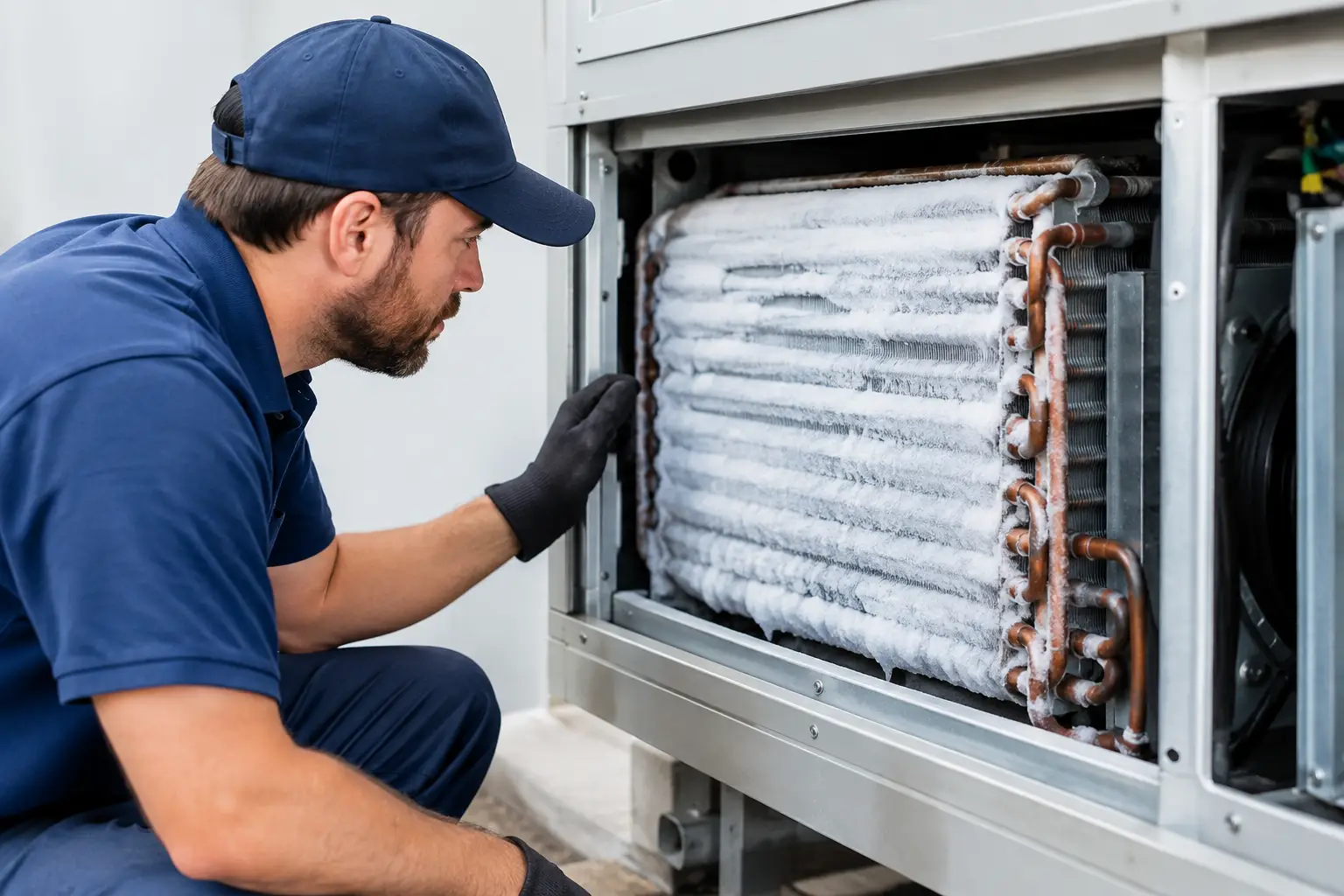
A solid block of ice on your indoor AC equipment is not a sign that your system is working extra hard. It is a warning that something is wrong. You may be able to take a few safe steps to fix a frozen evaporator coil temporarily, but the ice itself is usually a symptom, not the actual problem. Addressing the cause protects your comfort, your equipment, and your summer energy bills.
What a Frozen Evaporator Coil Means
The evaporator coil sits inside or near your indoor air handler or furnace cabinet. Refrigerant moves through this coil and absorbs heat from the air in your home. A blower then sends that cooled air through the ducts.
For that process to work correctly, the coil needs adequate warm airflow moving across it and the proper refrigerant charge inside it. When airflow is restricted or refrigerant pressure is too low, the coil temperature can drop below freezing. Moisture in the air then freezes on the coil, creating a growing layer of ice.
As the ice builds, airflow gets even worse. You might first notice weak air coming from the vents, then warmer indoor temperatures, and eventually a system that stops cooling altogether. Continuing to run an iced-up air conditioner can damage the compressor, which is one of the most expensive components to replace.
How to Fix a Frozen Evaporator Coil Safely
Start by turning the cooling system off at the thermostat. Do not keep lowering the thermostat setting in hopes that it will catch up. That will only continue the freezing cycle.
Next, set the thermostat fan setting to “On” rather than “Auto.” The indoor blower may help circulate room-temperature air over the coil and speed up thawing. If your system will not run the fan without the cooling mode, leave the entire system off and let it thaw naturally.
Do not chip, scrape, or pry ice from the coil. Evaporator coil fins bend easily, and refrigerant tubing can be punctured. Do not use a hair dryer, heat gun, or open flame, either. Sudden heat can damage components, and standing water around electrical equipment creates another concern.
A completely frozen coil can take several hours to thaw, and a heavily iced system may take most of a day. Place towels around the indoor unit if water could reach finished flooring, but avoid opening sealed equipment panels or handling electrical parts. Once the ice has melted, replace any dirty air filter and make sure all supply and return vents are open and unobstructed.
After those basic checks, restart the system and watch it closely. If it cools normally and stays ice-free, a clogged filter or blocked return may have been the issue. If the coil freezes again, turn cooling off and schedule a diagnostic visit. Repeated freezing calls for a proper HVAC inspection.
Common Reasons an Evaporator Coil Freezes
A dirty filter or restricted airflow
A clogged filter is one of the most common causes of a frozen coil, especially during a hot Ohio summer when the AC runs for long periods. The filter protects your equipment, but it must be changed on schedule. A filter packed with dust, pet hair, or construction debris limits the air reaching the coil.
Other airflow problems can produce the same result. Closed supply registers, blocked return grilles, a dirty blower wheel, undersized ductwork, a failing blower motor, or a dirty evaporator coil can all reduce airflow. Closing many vents to force cooling into certain rooms may seem practical, but it can put the system outside its intended operating conditions.
Low refrigerant from a leak
Your air conditioner does not use up refrigerant like a car uses fuel. If the refrigerant level is low, there is usually a leak somewhere in the system. Low pressure causes the evaporator coil to get colder than it should, which leads to ice formation.
Adding refrigerant without locating and addressing the leak is not a lasting repair. A technician should check operating pressures, inspect for likely leak points, and explain whether repair makes sense for the age and condition of the system. The right recommendation depends on the leak location, refrigerant type, repair cost, and overall equipment condition.
A dirty coil
Even with a clean filter, dust can eventually collect on the evaporator coil. This coating acts like a blanket between the air and the refrigerant tubing. Heat transfer suffers, airflow can be restricted, and freezing becomes more likely.
Because the coil is located inside the equipment cabinet, cleaning it is generally not a homeowner project. The wrong cleaner, too much water, or bent coil fins can create new problems. Professional maintenance gives a technician a chance to inspect the coil and clean it appropriately when needed.
Drainage, thermostat, or mechanical issues
A clogged condensate drain does not usually cause a coil to freeze by itself, but it can create water damage and may point to neglected maintenance. Thermostat settings, control problems, and blower failures can also contribute to improper system operation.
Heat pumps and ductless mini-splits can ice up for some of the same airflow and refrigerant reasons. However, they also have defrost controls and outdoor-unit considerations that differ from a conventional central AC system. That is one reason an accurate diagnosis matters more than guessing at a single cause.
Signs You Should Call an HVAC Technician
Call for service if the system freezes again after you install a clean filter and allow the coil to thaw fully. You should also schedule service if you hear hissing or bubbling noises, see water around the indoor unit, notice unusually high electric bills, or find that the blower is weak or not running.
A frozen coil paired with no cooling can become urgent during a heat wave, particularly for young children, older adults, pets, or anyone with health concerns in the home. In that situation, turn the cooling off to prevent further equipment damage and seek help promptly. Fusion Heating and Air provides straightforward diagnostic service for homeowners who need clear answers, not pressure to replace equipment that may be repairable.
During a diagnostic visit, a technician can inspect airflow, filter condition, blower performance, duct restrictions, drainage, electrical components, refrigerant pressures, and the condition of the coil. That process matters because two systems can show the same ice buildup for very different reasons. A dirty filter may be a simple fix; a refrigerant leak or failing blower requires a different repair plan.
Prevent Another Frozen Coil
The best prevention is regular attention before the hottest days arrive. Check your air filter monthly and replace it when it is visibly loaded or according to the filter manufacturer’s guidance. Homes with pets, allergies, renovation dust, or high summer runtime often need more frequent changes.
Keep return grilles clear of furniture, rugs, and storage. Use the correct filter size and avoid choosing an overly restrictive filter just because it sounds more advanced. High-efficiency filtration can be helpful for indoor air quality, but the filter must be compatible with your system’s airflow needs.
Annual cooling maintenance is also a practical safeguard. A thorough visit can catch dirty coils, weak capacitors, drainage issues, loose wiring, and early airflow concerns before they become a no-cooling call. It cannot prevent every repair, but it gives your system a much better chance of making it through the season reliably.
If your evaporator coil has frozen once, pay attention after restarting the system. Cool, steady airflow and normal cycling are good signs. Ice returning within hours is your cue to shut the system down and get the underlying problem checked before a manageable repair turns into a larger one.
Leave a Reply