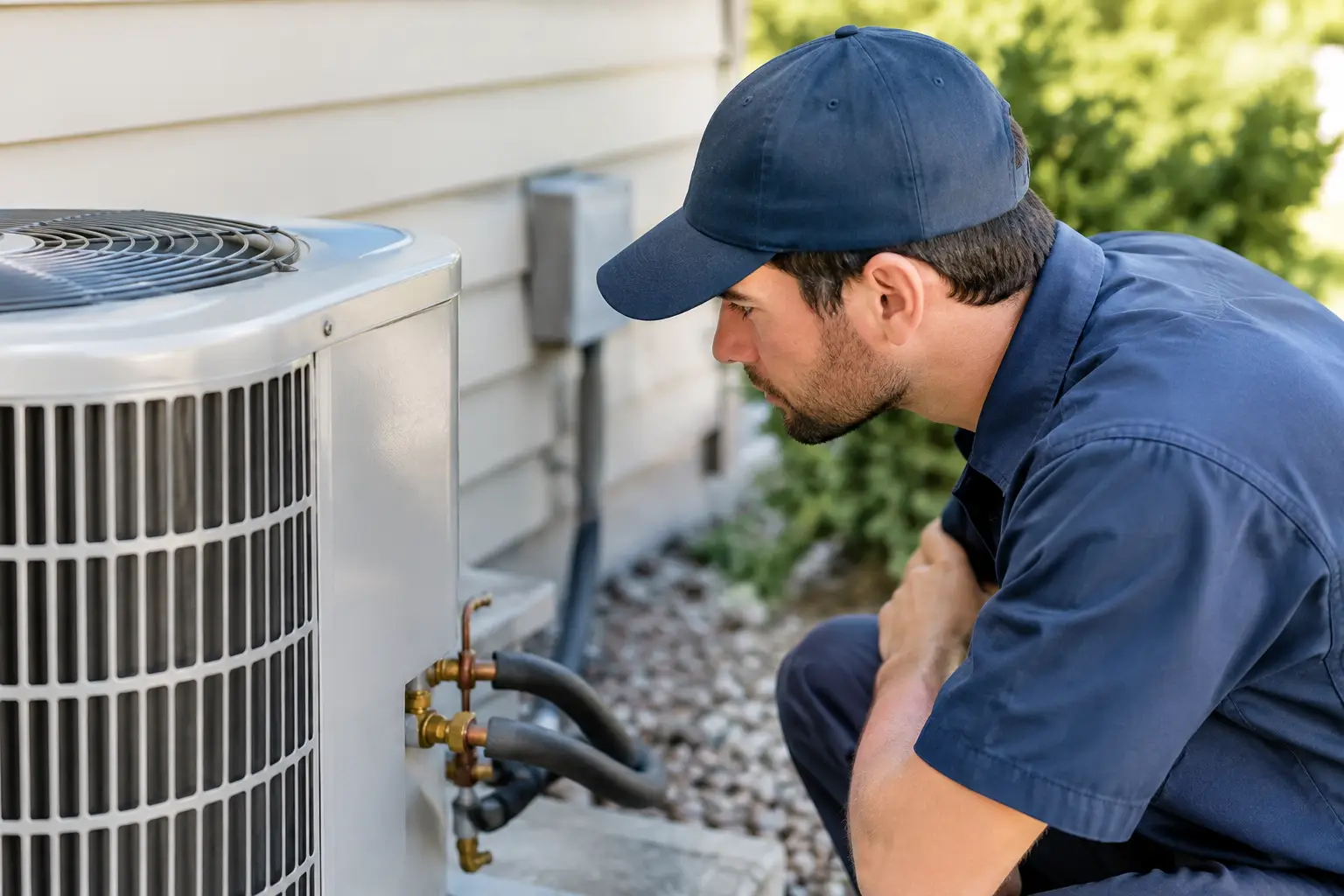
A refrigerant leak is not just a minor air conditioner problem you can put off until next season. Refrigerant leaks can make your home feel warmer and more humid, drive up operating costs, and put extra strain on equipment that is already working hard through an Ohio summer. The sooner the source is identified and repaired, the better the chance of avoiding a larger breakdown.
What refrigerant does in your HVAC system
Refrigerant is the fluid that moves heat from one place to another. In cooling mode, your air conditioner or heat pump absorbs heat from inside your home and releases it outdoors. In heating mode, a heat pump reverses that process to bring heat indoors.
Unlike fuel in a car, refrigerant is not supposed to be used up. Your system is sealed, so its refrigerant level should remain steady throughout normal operation. If a technician finds that your system is low, the usual reason is a leak somewhere in the refrigerant circuit.
That is why simply adding more refrigerant is rarely a complete repair. It may improve cooling for a while, but the same issue can return if the leak itself is not located and corrected.
Signs of refrigerant leaks at home
Many homeowners first notice a comfort change rather than an obvious mechanical problem. Your system may still turn on and blow air, but it no longer cools or heats the way it once did. Watch for a few common signs, especially if they appear together.
Your air conditioner may run for long stretches without reaching the thermostat setting. Rooms can feel sticky even when the thermostat shows that the system has been running. You may also notice weak cooling from supply vents, higher electric bills, or a system that starts and stops more often than usual.
Ice is another warning sign. Frost or ice on the copper refrigerant lines near the outdoor unit, indoor coil, or refrigerant cabinet can point to low refrigerant, though airflow problems can cause similar symptoms. A clogged filter, dirty coil, or failing blower can also lead to icing. That is one reason a proper diagnosis matters before assuming a leak is the answer.
Some leaks create a faint hissing or bubbling sound near the indoor or outdoor equipment. Others are too small to hear. Refrigerant itself is often odorless, so do not depend on smell to tell you whether a leak is present.
A heat pump may show the problem in winter, too
For homes with heat pumps, low refrigerant can affect both cooling and heating. The system may struggle to maintain indoor temperature, rely more heavily on auxiliary heat, or run longer than expected in cold weather. Because auxiliary heat can be expensive to operate, a heat pump that suddenly has higher winter energy use deserves attention.
Why a small leak can become a costly repair
Low refrigerant changes the way the entire system operates. The compressor may have to run longer to move enough heat, while the indoor coil may become cold enough to freeze moisture from the air. As ice builds, airflow drops further and comfort gets worse.
The compressor is one of the most expensive parts of an air conditioner or heat pump. Continuing to run a system that is low on refrigerant can increase the risk of compressor damage. In some cases, a repair that began as a leak search and seal can turn into a larger decision about major component replacement or system replacement.
There is also an environmental reason to repair leaks properly. Refrigerants are regulated chemicals, and releasing them into the atmosphere is not something a homeowner should try to handle. A qualified HVAC technician has the equipment to test the system, recover refrigerant when needed, and recharge it to the manufacturer’s specifications after repairs are complete.
Common causes of refrigerant leaks
Leaks can happen at several points in a system, and their cause often depends on the equipment’s age, installation quality, and operating conditions. Vibration over years of operation can loosen or wear on connections. Copper lines can be damaged by physical contact, rubbing, or outdoor conditions. Corrosion can also create tiny pinhole leaks in coils or tubing.
Some leaks occur at service valves, fittings, or brazed joints. Others develop in the indoor evaporator coil, which can be more difficult to access and repair. A leaking coil does not automatically mean replacement is the only option, but the decision depends on the location and size of the leak, the unit’s age, refrigerant type, condition of other major parts, and the expected life of the system.
Older equipment can make the decision more complicated. If a system uses an older refrigerant or has multiple expensive issues, investing heavily in a major repair may not provide the best long-term value. On the other hand, a newer unit with a repairable leak can often be restored to reliable operation. A good recommendation should explain both paths clearly, without pressure.
What a technician checks for refrigerant leaks
Accurately finding a leak takes more than checking a pressure reading. Pressure and temperature measurements can show whether the system appears low on refrigerant, but they do not identify where refrigerant is escaping.
A thorough service visit typically starts with checking airflow, filter condition, electrical operation, thermostat settings, coils, and drain components. This helps rule out other problems that can mimic low refrigerant symptoms. The technician can then inspect accessible refrigerant lines, fittings, valves, and coils for oily residue or visible damage.
Depending on the situation, leak detection may involve an electronic detector, soap-bubble testing at connections, ultraviolet dye from a previous repair, or a pressure test using appropriate equipment. The right method depends on the suspected leak location and whether refrigerant remains in the system.
Once the leak is found, the technician can discuss whether repair is practical. After a repair, the system should be tested for tightness, evacuated to remove moisture and air, and charged according to manufacturer requirements. This process is more careful than adding refrigerant alone, and it helps protect performance and equipment life.
What homeowners should and should not do
If you see ice on refrigerant lines or the indoor coil area, turn cooling off at the thermostat. Leaving the blower fan set to On can help circulate air and allow the ice to thaw, but do not chip at the ice or use sharp tools around the coil. Damaging a coil can create an even larger repair.
Check the air filter as well. A heavily clogged filter restricts airflow and may contribute to icing, regardless of whether a refrigerant issue is also present. Replace a dirty disposable filter with the correct size and type, then allow the system to thaw completely before it is evaluated.
Avoid store-bought refrigerant products or do-it-yourself recharge kits. Home HVAC refrigerant work requires specialized tools, training, and proper handling procedures. More importantly, adding refrigerant without identifying the cause can mask a problem while allowing damage to continue.
Preventing future leak problems
No maintenance visit can guarantee that a refrigerant line or coil will never leak, but routine service can uncover early warning signs. Seasonal maintenance gives a technician the chance to check temperature performance, electrical components, drainage, coils, and overall operation before a small concern turns into a no-cooling call.
Keeping outdoor equipment clear of weeds, leaves, and lawn debris also helps. Do not stack items against the unit or allow landscaping to crowd it. Indoors, use the correct filter and replace it regularly. Good airflow reduces stress on the system and makes it easier to spot a true refrigerant problem when one develops.
For homeowners in Troy, Piqua, Tipp City, and the surrounding Miami Valley, a system that is not keeping up should be checked before the hottest days arrive. Fusion Heating and Air can evaluate the equipment, explain what the readings mean, and provide straightforward options based on what your home actually needs.
A refrigerant issue is rarely something to ignore, but it does not always mean the worst-case scenario either. A careful diagnosis gives you the facts to make the right decision for your comfort, your budget, and the remaining life of your system.
Leave a Reply