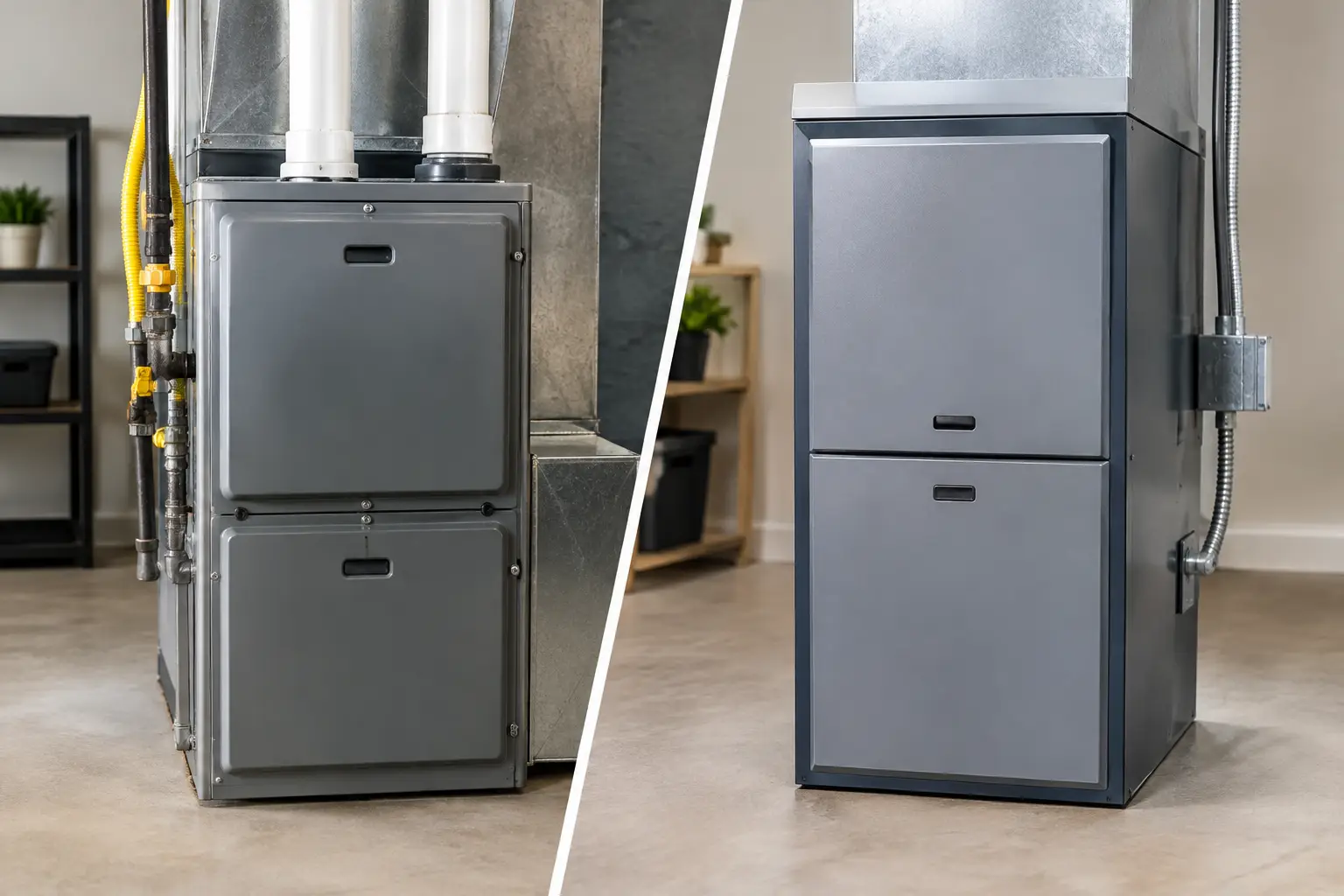
A furnace replacement is not just a question of what will heat the house. For Miami Valley homeowners, the gas furnace versus electric furnace decision affects installation cost, winter utility bills, comfort during cold snaps, maintenance needs, and the equipment your home can support. The right answer depends on your existing utilities, your home’s heat loss, and how long you plan to stay in the house.
Gas Furnace Versus Electric Furnace: The Core Difference
A gas furnace creates heat by burning natural gas. The heat moves through a heat exchanger, and a blower sends warmed air through the home’s ductwork. Because it generates a high level of heat quickly, a properly sized gas furnace can deliver noticeably warm air at the registers even when outdoor temperatures in Ohio are well below freezing.
An electric furnace uses electric resistance heating elements, much like oversized versions of the elements in a toaster or electric oven. Electricity passes through the elements, they heat up, and the blower distributes that heat through the ducts. There is no combustion, fuel line, flue pipe, or heat exchanger involved.
Both can provide dependable whole-home heating when they are properly installed and maintained. The bigger differences usually show up in operating cost, installation requirements, and the home’s existing setup.
Upfront Installation Cost Depends on What Your Home Already Has
Electric furnaces often cost less to purchase and install when a home already has adequate electrical service. The equipment is generally simpler, and there is no gas piping, combustion venting, or condensate management associated with a high-efficiency gas furnace.
That said, an electric furnace can require substantial electrical capacity. Many units need large dedicated circuits, and an older home may need an electrical panel upgrade before installation. That added work can change the initial price quickly.
If your home already has natural gas service and a vented gas furnace, replacing it with another gas model is often the more straightforward path. Changing from electric to gas can involve bringing in gas piping, adding proper venting, confirming combustion-air requirements, and meeting local code. Changing from gas to electric may require removing or capping gas components and verifying that the electrical system can handle the load.
A replacement quote should account for the full project, not just the furnace cabinet. Proper duct connections, drainage, venting, electrical work, thermostat compatibility, permits where required, and startup testing all matter to the system’s performance.
Monthly Heating Costs Are Usually the Biggest Difference
Electric furnaces are highly efficient at the point of use. Nearly all the electricity they consume becomes heat inside the home. A gas furnace has an Annual Fuel Utilization Efficiency, or AFUE, rating that indicates how much of its fuel becomes usable heat. Modern high-efficiency gas furnaces commonly have AFUE ratings in the 90 percent range or higher.
But efficiency ratings do not tell the whole cost story. Natural gas is often less expensive per unit of heat than electricity in this part of Ohio. As a result, a gas furnace frequently costs less to operate through a full heating season, especially in a home with average or above-average heating needs.
Utility rates can change, and the numbers vary by household. A smaller, well-insulated home may see a different cost comparison than an older two-story home with leaky windows, an unfinished basement, or ductwork running through unconditioned areas. Your thermostat habits also matter. Holding a higher indoor temperature all winter increases energy use regardless of the fuel source.
It is also worth separating an electric furnace from a heat pump. A heat pump runs on electricity, but it moves heat rather than creating all of it through resistance elements. In many situations, a heat pump can be far less expensive to operate than an electric furnace. Some homes use a heat pump with a gas furnace as backup, often called a dual-fuel system. That can be worth discussing during a full system replacement, but it is not automatically the best fit for every home.
Comfort in an Ohio Winter
Gas furnaces generally produce hotter supply air than electric furnaces. That does not mean an electric furnace cannot keep a home comfortable. It can. However, homeowners accustomed to a gas furnace sometimes notice that air from an electric furnace feels less hot at the vent, even when the system is maintaining the thermostat setting correctly.
Comfort is about more than outlet temperature. Furnace sizing, blower setup, duct condition, insulation, air leaks, and thermostat location all influence whether rooms heat evenly. An oversized furnace may warm the house quickly but cycle on and off too often, which can create temperature swings and unnecessary wear. An undersized furnace may run for long periods and struggle during the coldest weather.
A good replacement recommendation starts with the home, not a guess based on the old furnace’s size. Changes such as new windows, attic insulation, a finished basement, or home additions can alter the heating load. Before selecting equipment, the contractor should evaluate the space, existing ductwork, and any comfort complaints you have noticed.
Safety and Maintenance Considerations
Electric furnaces do not burn fuel, so they do not produce combustion gases or require a flue. That can be appealing for homeowners who want a simpler heating appliance. They still need professional service, though. Electrical connections, heating elements, blower components, filters, safety controls, and airflow all need attention.
Gas furnaces are safe when correctly installed and maintained, but they require additional safety checks because they use combustion. Annual service should include inspecting the heat exchanger, burners, flame sensor, venting, gas connections, drainage on condensing models, and carbon monoxide safety. Every home with fuel-burning equipment should have working carbon monoxide alarms in appropriate locations.
For either type of furnace, regular filter changes are one of the easiest ways to protect comfort and equipment life. A clogged filter restricts airflow, makes the blower work harder, and can contribute to overheating or uneven temperatures. The right filter type and replacement schedule depend on the system, household, pets, and indoor-air-quality needs.
Lifespan, Repairs, and Replacement Planning
A well-maintained gas or electric furnace can provide many years of service. Actual lifespan depends on installation quality, maintenance, run time, airflow, and whether the system was properly sized from the beginning. A furnace that has been short-cycling or operating with restricted airflow may wear out sooner than expected.
Electric furnaces have fewer combustion-related components, which can mean fewer specialized maintenance concerns. Gas furnaces have more parts involved in ignition, combustion, venting, and safety monitoring. Neither fact should be treated as a guarantee that one type will be trouble-free. Age, repair history, and the condition of the whole HVAC system are more useful indicators.
If your furnace needs a major repair, it helps to consider the larger picture. Is the air conditioner also nearing the end of its service life? Is the ductwork undersized? Does the home have rooms that are always too cold? Replacing only one piece of equipment may be sensible, but sometimes planning the system together avoids compatibility issues and repeat labor later.
Which Furnace Is Right for Your Home?
A gas furnace is often a practical choice for a home that already has natural gas, especially when the goal is lower winter heating costs and strong heat output during Ohio cold spells. An electric furnace may make sense where gas is unavailable, where electrical capacity is already in place, or where a homeowner prefers to avoid combustion equipment.
There is no honest one-size-fits-all answer. The best choice should reflect your utility availability, electrical panel, insulation level, ductwork, budget, comfort expectations, and long-term plans for the property. A low upfront price is not always the lowest cost over time, and the most efficient equipment on paper will not perform as expected if it is installed incorrectly.
Before choosing a furnace, ask for clear options based on your actual home and have the numbers explained in plain language. Fusion Heating and Air can help homeowners compare those options without pressure, so the next cold morning feels like a routine part of winter, not a test of whether your heating system can keep up.
Leave a Reply